
Backlinks still matter in SEO. Google says PageRank remains part of its core ranking systems and has evolved significantly since Google Search first launched.
But not every backlink is equal. A link from a trusted, relevant page can send readers your way. A link bought from a random site may do nothing, or put you at risk.
Google also works hard to stop link spam. Its spam systems include SpamBrain, an AI-based spam prevention system. Google has said it has gotten much better at spotting and neutralizing link schemes.
That’s why white hat link building matters. It focuses on earning links that give readers real value. It’s slower than buying links. But the links tend to last, and they don’t put your site at risk.
This guide shows you how it works, how to judge any backlink, 10 strategies you can use, and how to run a campaign and measure it.
In short: Earn links with helpful content and real relationships. Never pay for ranking credit. Check every link and every site before you chase it. Measure relevance and results, not just link counts.
What Is White Hat Link Building?
White hat link building is the process of earning backlinks through methods that follow search engine guidelines and provide real value to users.
A backlink is a link from another website to your website. For example, if a marketing publication references your original SEO study and links to it, that is a backlink.
White hat link building usually involves one or more of these activities:
- Creating useful, link-worthy content
- Publishing original research and data
- Building relationships with relevant publishers
- Digital PR and journalist outreach
- Broken link building
- Earning links from relevant resource pages
- Contributing useful expert content
- Recovering unlinked brand mentions
- Studying competitor backlink profiles for opportunities
The key idea is simple:
You should have a good reason for another website to link to your page besides the fact that you want a backlink.
That reason could be original data, a useful tool, a detailed guide, expert insight, a valuable resource, or information that improves the reader’s experience.
White hat SEO follows the same broader principle. It focuses on users, useful content, and sustainable growth instead of trying to exploit search engine loopholes.
Why Is White Hat Link Building Important?
A strong backlink profile can support your SEO strategy in several ways.
1. It can help search engines discover your content
Links create paths between websites and pages. A new page that earns links from relevant websites can become easier for search engines to discover.
2. It can strengthen your site’s authority
A backlink from a relevant, trusted publication can provide a useful signal about your site’s reputation and relevance.
However, you should not treat every backlink as an automatic ranking boost. Link quality, relevance, context, and how the link was acquired all matter.
3. It can bring referral traffic
A good backlink is not only an SEO asset.
If the linking website has an audience that matches your business, readers may click the link and visit your website.
That can lead to:
- New visitors
- Leads
- Subscribers
- Customers
- Brand awareness
4. It can build relationships
Good link building often involves talking to editors, journalists, bloggers, founders, and other people in your industry.
Those relationships can lead to future opportunities such as:
- Interviews
- Podcasts
- Partnerships
- Expert quotes
- Co-marketing
- Industry research
5. It supports long-term SEO growth
White hat link building is generally focused on building assets and relationships that can continue providing value over time.
That is very different from creating hundreds of low-quality links simply because they are cheap.
Don’t expect magic. No single backlink automatically raises your rankings. Links can’t rescue a page that misses search intent or gives a weak answer. Links work best on top of strong content, a healthy site, and good off-page SEO.
A note on AI search. Google updated its spam policies on May 15, 2026, to cover attempts to manipulate AI answers such as AI Overviews and AI Mode. Earn your mentions. Read Search Engine Land’s report for details.
How Does White Hat Link Building Work?
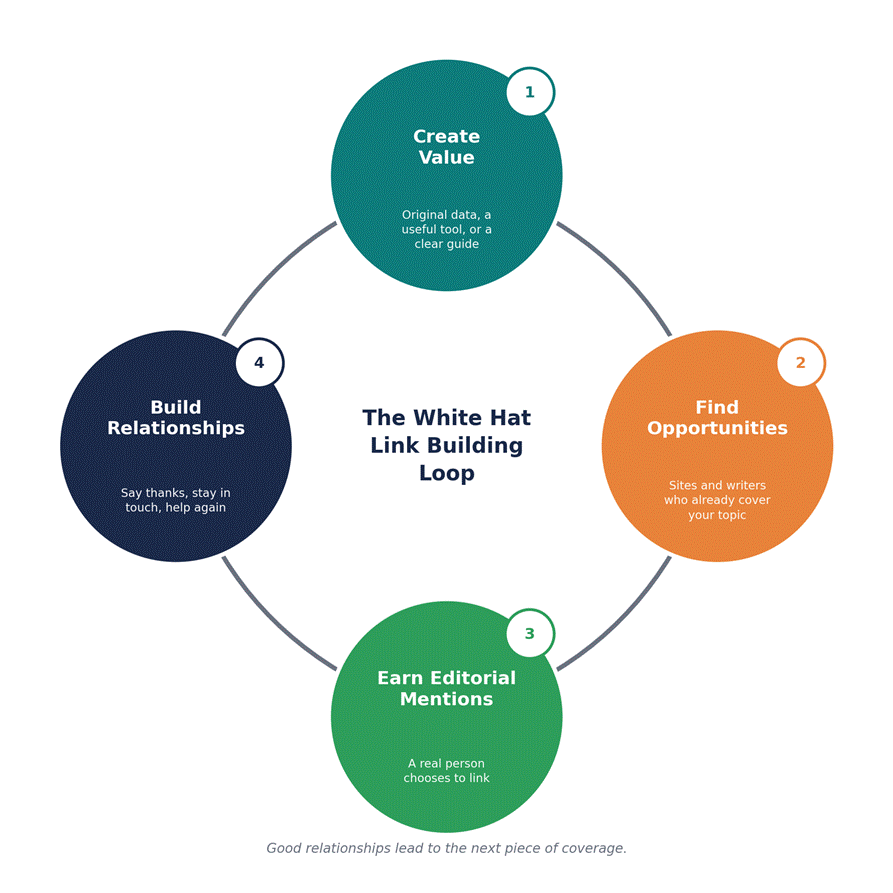
Think of it as four steps that feed each other:
Create value → Find relevant opportunities → Earn editorial mentions → Build relationships
- Create value. Make something people want to cite. That could be original data, a useful tool, a clear guide, or expert advice.
- Find relevant opportunities. Look for sites and writers who already cover your topic. They’re the people who’d care.
- Earn editorial mentions. Show them why your page helps their readers. A real person then chooses to link.
- Build relationships. Keep in touch, say thanks, and help again. Editors and writers remember useful sources, so the next link is easier.
It’s a loop. Good relationships lead to the next piece of coverage.
What Makes a Backlink White Hat?
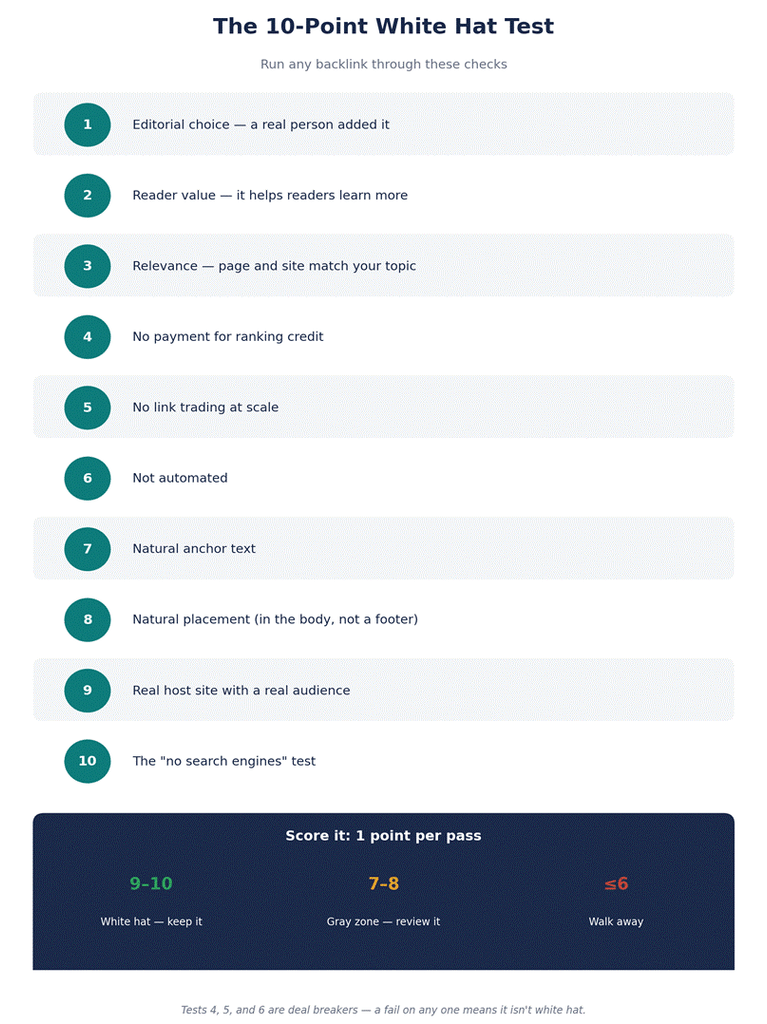
Use this 10-point test on any link, before or after you get it.
| # | Test | It passes when… | It fails when… |
| 1 | Editorial choice | A real person chose to add it | A deal or a tool put it there |
| 2 | Reader value | It helps readers learn more | It adds nothing for readers |
| 3 | Relevance | The page and site match your topic | The topic has nothing to do with yours |
| 4 | No payment for ranking credit | Nothing was paid, or the link is marked rel=”sponsored” | Money or goods bought a followed link |
| 5 | No link trading at scale | Cross-links are rare and natural | “Link to me, I’ll link to you” is routine |
| 6 | Not automated | A person placed it | Software or a service mass-created it |
| 7 | Natural anchor text | Brand name, page title, or plain words | The same exact-match keyword, again and again |
| 8 | Natural placement | Inside the body of a useful page | Footer, sidebar, widget, or forum signature |
| 9 | Real host site | Real audience, real editing, real authors | A site built to sell links |
| 10 | The “no search engines” test | It would exist even if Google didn’t | It exists only to move rankings |
Test 10 is the quickest gut check. Ask whether the link would have been added if nobody had paid, traded, or pushed for it.
How to score it. Give one point for each pass.
- 9–10: White hat. Keep it.
- 7–8: Review it. It may sit in the gray zone.
- 6 or lower: Walk away.
Tests 4, 5, and 6 are deal breakers. If a link fails any of them, it isn’t white hat, whatever the total says.
Two quick examples (made up):
- A reporter cites your survey. Nothing was paid, the anchor is your brand name, and the site is real. Score: 10/10.
- A vendor sells you a “DA 60 guest post” for $150 with an exact-match anchor and no sponsored tag. Score: about 4/10. It fails the payment test, the anchor test, and probably the “no search engines” test.
White Hat vs. Black Hat vs. Gray Hat Link Building
| White hat | Gray hat | Black hat | |
| How links are earned | Real editorial choices | Borderline: deals that look editorial | Schemes built to fool search engines |
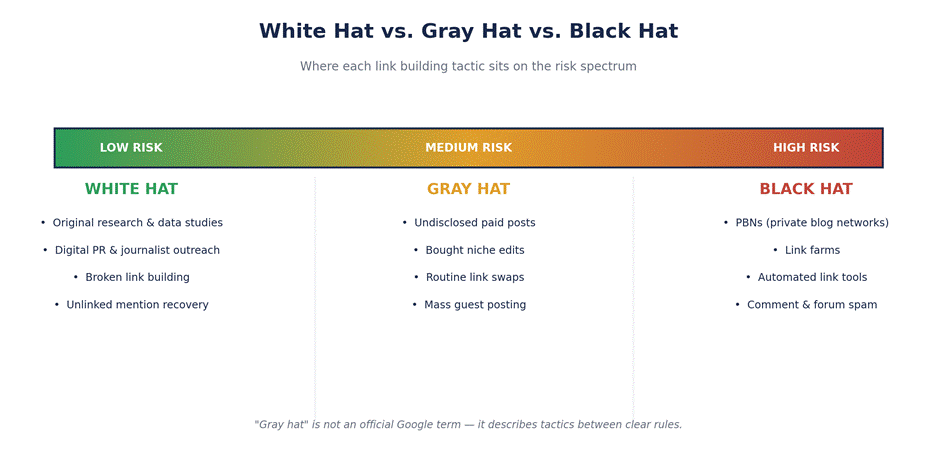
| Typical tactics | Original research, digital PR, broken link building, unlinked mentions | Undisclosed paid posts, bought niche edits, routine link swaps, mass guest posting | PBNs, link farms, automated link tools, comment spam |
| Google’s view | Within policy | Depends on scale and intent | Violates spam policies |
| Risk | Low, but not zero | Medium, and it can change | High |
| Speed | Slow | Medium | Fast at first |
| Durability | Tends to last | Uncertain | Often short-lived |
“Gray hat” isn’t an official Google term. It’s a way to describe tactics that sit between clear rules.
Black hat tactics are easy to spot in the policy. Google lists low-quality or keyword-rich links inside widgets, links spread through footers or templates, forum comments with optimized links, and low-value content made to manipulate linking signals.
Google also doesn’t wait for a named update to act. Google’s automated spam systems can detect and neutralize manipulative linking practices without requiring a named algorithm update.
What Makes a Backlink High Quality?
A high-quality backlink is not simply a link from a website with a high Domain Rating or Domain Authority.
Third-party metrics can help with prospecting, but they should not be your only filter.
Instead, ask these questions.
1. Is the website relevant?
A link from a website that covers your industry or a closely related topic usually makes more sense than a random link from an unrelated site.
For example, a SaaS company would have a much stronger reason to earn a link from a software or business publication than from a random website about an unrelated topic.
2. Does the link help readers?
Imagine the SEO value disappeared.
Would the link still be useful to someone reading the article?
If the answer is yes, that is a good sign.
3. Is the placement editorial?
A contextual link inside a useful article is usually more meaningful than a link hidden in a footer, sidebar, author profile, or unrelated page.
4. Does the site have a real audience?
Look beyond third-party authority metrics.
Check:
- Organic traffic
- Ranking keywords
- Content quality
- Publishing history
- Social presence
- Audience relevance
5. Is the anchor text natural?
Don’t force exact-match keywords into every backlink.
Instead of repeatedly building links with:
white hat link building
you might naturally see anchors such as:
- this link building guide
- ethical link building
- backlink strategies
- learn more about link building
Natural variation is usually better than trying to control every anchor.
6. Would you want the association?
Ask yourself:
Would I still want this website to mention my brand if Google did not exist?
If the answer is no, the opportunity may not be worth pursuing.
10 White Hat Link Building Strategies That Actually Work
You don’t need all ten. Start with two or three that fit your site and time.
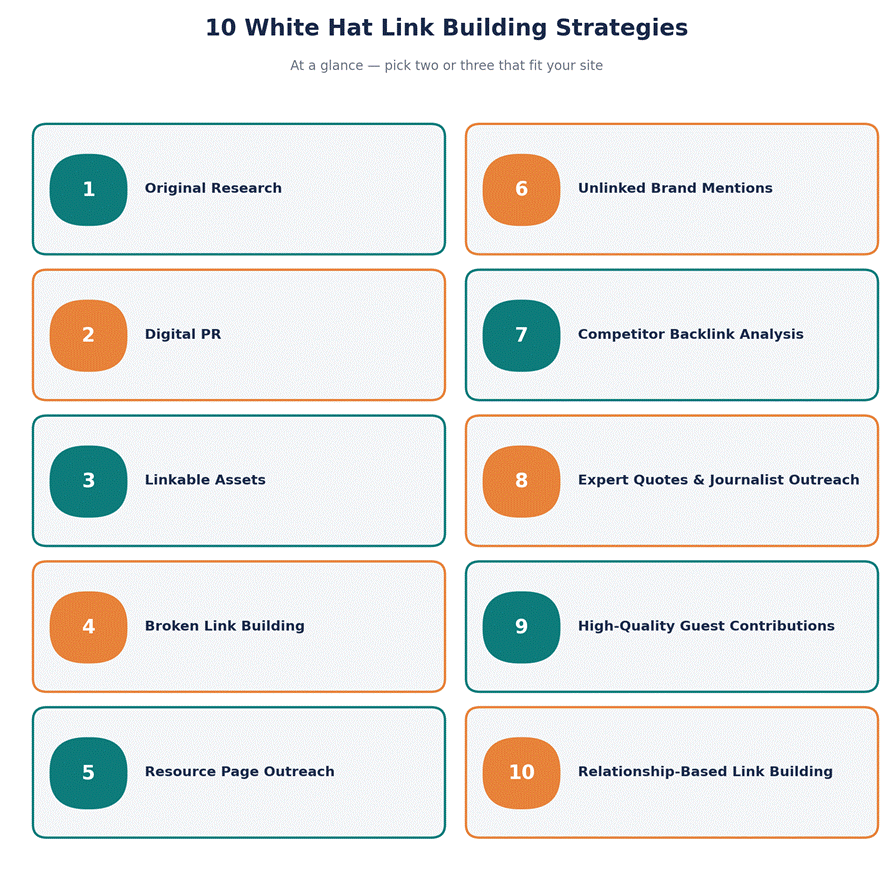
1. Original Research
Original research is data nobody else has. That makes it hard to copy and easy to cite. Proprietary data works best because no one else can recreate it.
How to do it:
- Pick a question your audience keeps asking.
- Answer it with your own data (sales, usage, support tickets) or a small survey. You can also re-analyze public data, like government numbers, in a new way.
- Publish the results on one page with clear charts and your method.
- Pitch reporters and bloggers who covered similar studies.
Watch out: Tiny or sloppy surveys hurt trust. Show your sample size and how you collected the data.
2. Digital PR
Digital PR means earning coverage on news and industry sites. In Editorial.link’s survey of 518 SEO professionals, 48.6% of respondents selected digital PR as the most effective link-building tactic, ahead of guest posting (16%) and linkable assets (12%). Google’s John Mueller said in 2021 that he likes much of what he sees from digital PR, and that it’s a shame it gets lumped in with spammy link building.
How to do it:
- Find a real angle: new data, a trend, or a surprising finding.
- Pitch journalists who already cover your topic.
- For reactive PR, offer a fast expert comment when news breaks.
Watch out: Some news sites use nofollow links. The coverage still builds brand mentions and trust.
3. Create Linkable Assets
A linkable asset is a page built to be referenced. Think statistics pages, free calculators, templates, glossaries, and data visuals. Statistics posts are the clearest example of topics writers link to, because they need a source.
How to do it:
- Search “[your topic] statistics” and see who links to the top pages.
- Build a better version: sourced, dated, and easy to scan.
- Update it on a schedule.
- Give it solid on-page SEO so it matches what people search for.
Watch out: Google shows its own calculators for some searches, so check clicks against search volume before you build a tool.
4. Broken Link Building
You find a dead link on a relevant page and offer your working page as a replacement. You help the site owner fix a problem.
How to do it:
- Enter a competitor’s URL in Ahrefs Site Explorer, open the “Broken backlinks” report, and sort by Domain Rating. The Check My Links Chrome extension works for single pages. A crawler like Screaming Frog also helps. See our tested SEO tools for Mac.
- Use the Wayback Machine to see what the dead page covered.
- Offer a replacement that truly matches.
Here’s the email:
Subject: Dead link on your [topic] page
Hi [Name], I was reading your guide and noticed the link to [resource] now shows a 404. I recently published a current guide on the same topic. If it helps, it could replace the broken link. Either way, I thought you’d want to know.
For more detail, see Ahrefs’ broken link building guide.
5. Resource Page Outreach
Resource pages list helpful links on one topic. Libraries, schools, associations, and niche blogs often run them.
How to do it:
- Search “your topic” inurl:resources or “your topic” intitle:resources.
- Skip pages buried deep in a site or packed with outbound links. They pass less value.
- Pitch only if your page truly fits, and say where it would go.
Watch out: If your page isn’t better than what’s listed, don’t pitch it yet.
6. Unlinked Brand Mentions
Someone already named you but didn’t link. That’s the easiest ask in link building.
How to do it:
- Set up Google Alerts for your brand, product, and founder names.
- Search your brand name minus your own site.
- Only ask if the mention is positive, and skip sites that sell links or ask for payment.
- Thank them first. It raises your success rate.
Subject: Thanks for mentioning [Brand]
Hi [Name], thanks for including [Brand] in your article. I noticed the mention isn’t linked. Would you mind adding a link so readers can find us easily? Happy to send a short description if that helps.
7. Competitor Backlink Analysis
This is a research tactic. It shows you where to look.
How to do it:
- Pick three competitors that rank for your target keyword.
- Use Ahrefs or Semrush to list their referring domains (unique sites that link to them).
- Sort them by relevance and real traffic.
- Ask why each site linked: a study, a tool, a resource page, or a news story.
- Earn similar links with your own, better asset.
Watch out: Ignore links your competitor probably bought. Copying them copies their risk.
8. Expert Quotes and Journalist Outreach
Reporters need expert sources, and a quote often comes with a link.
HARO was retired and folded into Connectively, which then shut down. Featured, Qwoted, Help a B2B Writer, and Source of Sources are the main replacements. Qwoted and SourceBottle offer free tiers, and Help a B2B Writer is free for B2B topics. Journalists also post requests on X using #JournoRequest and #PRRequest.
How to do it:
- Reply within the first hour with a ready-to-publish quote and specific expertise, not a generic answer.
- Answer only requests that match your field.
- Keep it short and useful.
Watch out: Expect a low single-digit conversion rate per pitch. Volume and patience matter.
9. High-Quality Guest Contributions
Guest contributions can build audience and trust. They can also become link spam. That’s why we cover them in their own section below.
The short rules:
- Write only for relevant sites with real editors and real readers.
- Share your expertise, not an ad.
- Use one natural link. Never pay for a followed link.
10. Relationship-Based Link Building
Some of the best links come from people who already know your business.
- Suppliers and manufacturers with “where to buy” or partner pages
- Trade associations and local chambers of commerce
- Events and charities you sponsor (mark paid sponsorship links as rel=”sponsored”)
- Podcast hosts who interview you
- Customers and partners who feature your case study or testimonial
Build relationships first. Share their work, answer their questions, and offer data or quotes. Ask for a link only when it makes sense for their readers.
Watch out: Partner pages made only for cross-linking count as link spam.
Is Guest Posting White Hat?
Short answer: It can be. Guest posting is white hat when you share real expertise with a real audience, the site has editorial standards, no money buys the link, and the link is natural. It becomes link spam when the goal is a followed link, the anchors are stuffed with keywords, or you pay for the placement.
What Google says
- Google’s spam policy names paid advertorials, and links with optimized anchor text in articles, guest posts, or press releases distributed on other sites, as link spam.
- John Mueller has described paid guest posts as advertising. The links should carry nofollow or sponsored attributes.
- In 2020, he added that even unpaid guest post links you supply shouldn’t pass signals and should be marked sponsored or nofollow. Other reports of his earlier advice say intent is the key. A link placed to help your rankings should be nofollowed. A truly natural link doesn’t need it.
- Google has warned that sites publishing or acquiring links through excessive sponsored posts and guest posting without proper tags can face algorithmic and manual actions. Read Google’s full explanation.
What that means for you: Treat guest posting as audience-building first. Value the readers, the referral traffic, and the brand exposure. If the link passes ranking value, that’s a bonus, not the plan.
A quick test: is this guest post white hat?
- Would my target customers read this site?
- Does the site have named authors and real editing?
- Am I writing something useful, not a thin ad?
- Is my link natural, with a branded or descriptive anchor?
- Did I pay nothing for a followed link?
- Would I be fine if the link were nofollowed?
Six yeses is a good sign. Any “no” on questions 5 or 6 is a warning.
Vet the site first. BuzzStream reports that only about 1.37% of guest post opportunities meet quality standards. In our Voozon review, a seller’s pitch led with 855,000 monthly visitors. But that traffic came from brand searches and landed on the homepage, not on articles. The site also published no link policy. Ask for page-level data, not domain-level claims.
Are Paid Backlinks White Hat?
No, not when you pay for ranking credit. Paying for advertising or sponsorship is different, as long as the link is labeled.
Google says buying and selling links is a normal part of the web economy for advertising and sponsorship. It’s not a violation when the links carry rel=”nofollow” or rel=”sponsored”. Payment can also mean goods or services. Exchanging links for money, goods, products, or services is listed as a link scheme.
Here are the three link attributes:
| Attribute | Use it for |
| rel=”sponsored” | Paid placements, ads, and affiliate links |
| rel=”ugc” | User-generated content, like comments and forum posts |
| rel=”nofollow” | Links you’d rather not vouch for |
An example of a marked paid link:
html
<a href=”https://example.com/” rel=”sponsored”>Example brand</a>
Google treats these attributes as hints. You can read more in Google’s guide to qualifying outbound links and the nofollow update.
A sponsored link won’t pass ranking credit. But it can still bring traffic and brand exposure. One SEJ analysis put it plainly: paid guest posts work as advertising, not as link building. Labeling ads also matters for readers and, in many places, advertising rules.
Red flags in placement marketplaces:
- No company name, terms, or track record
- Promises of “DA 60+ links” for a flat fee
- No answer on whether links are followed or sponsored
- No page-level traffic data
We look at one example in our BannerAdSites.com review. It’s a broker listing hundreds of placements with no company details, no terms, and no track record. If you use a marketplace at all, treat it as advertising and label every link.
Are Niche Edits White Hat?
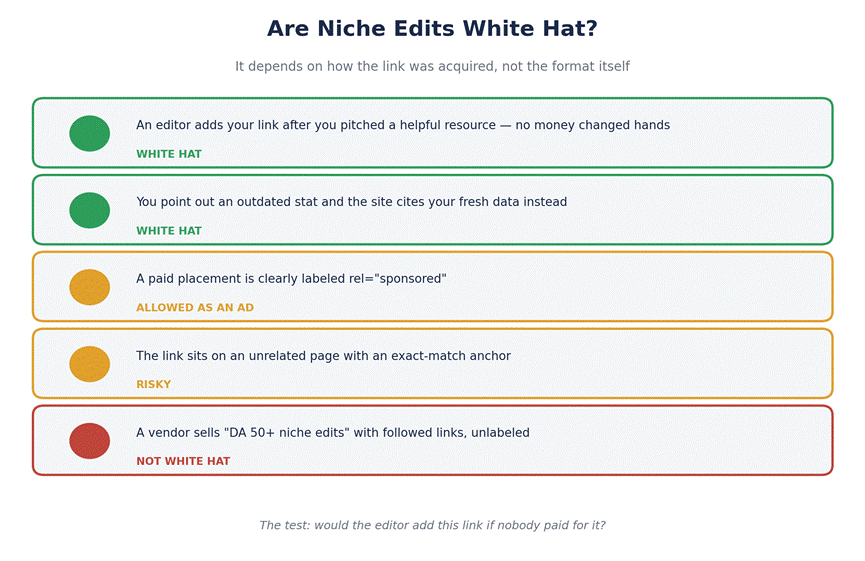
It depends on how the link was acquired and why. Niche edits (also called link insertions) are links placed into an existing page after it was published. The format isn’t the problem. The danger is how the link was acquired, labeled, and placed.
| Scenario | Verdict |
| An editor adds your link after you pitched a helpful resource. No money changed hands. | ✅ White hat |
| You point out an outdated stat, and the site cites your fresh data. | ✅ White hat |
| A vendor sells “DA 50+ niche edits” with followed links. | ❌ Not white hat. You paid for ranking credit. |
| A paid placement is labeled rel=”sponsored”. | ⚠️ Allowed as advertising. It won’t pass ranking credit. |
| The link goes on an unrelated page with an exact-match anchor. | ⚠️ Risky |
The same tests apply. Would the editor add this link if nobody paid? Does it improve the paragraph? Paid or manipulative link insertions can fall under Google’s link-spam policies, particularly when they are intended to pass ranking credit.
If you’re weighing vendors, our roundup of SaaS link building services shows what to ask: how they vet sites, whether you can approve domains, and what their replacement policy is.
How to Evaluate a Website Before Pursuing a Backlink
The 10-point test above judges a link. This 10-point prospect score judges the site before you send a single email. Score each check 0, 1, or 2.
| # | Check | What to look for |
| 1 | Topical relevance | The site and page match your topic |
| 2 | Real organic traffic | Page-level traffic, not just a big domain number |
| 3 | Editorial standards | Guidelines, real editing, and pitches get rejected |
| 4 | Author and owner transparency | Named authors with credentials, and a clear owner |
| 5 | Content quality and freshness | Original, useful, and recently updated |
| 6 | Link neighborhood | Few, relevant outbound links, and no link lists |
| 7 | Backlink profile health | No spam spikes or low-quality directory links |
| 8 | Authority metrics | DR or DA as a rough filter only |
| 9 | Link policy | No “sponsored post” price list or link-selling signs |
| 10 | Audience fit | Your customers would read it, and you’d be proud to be listed |
Scoring:
16–20: Strong prospect — worth prioritizing
12–15: Review manually before outreach
Below 12: Usually not worth pursuing
Tips on the tricky checks:
- Traffic: Check the page, not just the domain. See the Voozon example above.
- Metrics: One agency uses a floor of DR 40 and at least 1,000 monthly organic visits. Use a floor like that as a first filter, then check quality yourself. Our AI and productivity tools post shows how we run a quick DA/PA check before digging deeper.
- Link neighborhood: Our Apkek.org review shows what a mixed-topic, promo-heavy blog looks like.
- Transparency: Our Glossywise.com review shows why an unnamed owner and authors with no visible credentials weaken trust.
How to Build a White Hat Link Building Campaign
Step 1: Define your target pages
Pick three to five pages that should rank or convert. Make sure they’re indexable, fast, and useful. A quick technical SEO check helps here. Also open the Search Console Links report to see who links to you the most and which of your pages get the most links.
Step 2: Research competitors
List the top three pages for your target keyword. Note how many referring domains each has, and what kind of content earns them.
Step 3: Find linkable opportunities
Look for gaps. What do writers in your niche keep citing? Which questions have weak answers? Which sites already link to similar content?
Step 4: Build or polish the asset
Add original data, clear visuals, sources, and a named author with a date. A great asset makes outreach easy.
Step 5: Build your prospect list
Use competitor linkers, resource pages, journalists who covered the topic, and brand mentions. Track each prospect in a sheet with the URL, contact, angle, score, and status.
Step 6: Qualify prospects
Run each site through the 10-point prospect score. Cut the weak ones now. It saves time later.
Step 7: Personalize outreach
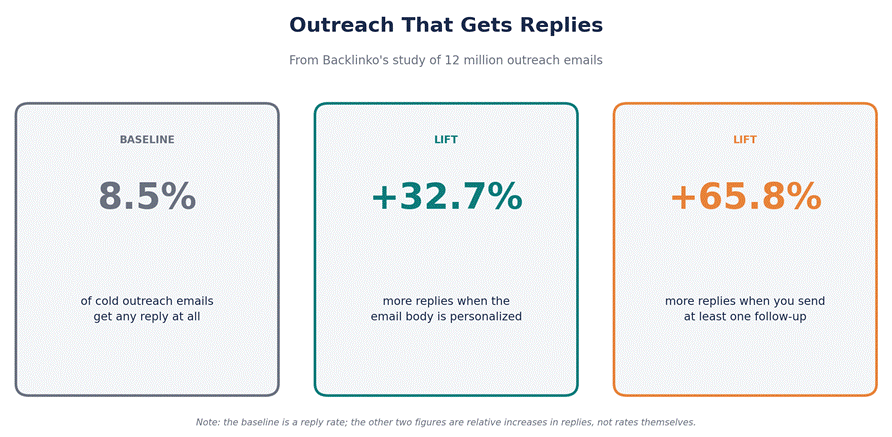
Mention something specific from their work. State one ask. Explain the benefit to their readers. Backlinko’s analysis of 12 million outreach emails found that personalized email bodies were associated with a 32.7% higher response rate.
Step 8: Follow up
Send one or two short follow-ups a few days apart. Add something new each time, like a fresh stat. A summary of the same study says a single follow-up can lift replies by up to 65.8%. Then stop.
Step 9: Earn the placement
Make it easy. Offer a short summary, an image, or an updated number. When the link goes live, say thanks and record the URL, anchor text, and link attribute. Don’t argue about nofollow.
Step 10: Monitor results
Track new links, lost links, referral traffic, rankings, and mentions. Review monthly. Refresh your asset when data gets old.
White Hat Link Building Outreach Template
Here’s a short email you can adapt. It pitches a data study to a writer who covers small business.
Subject: Data on late-paying clients, for your freelancer guide
Hi Sara,
I read your guide on getting paid on time. The tip on invoice reminders was useful.
We just surveyed 300 small-business owners about late-paying clients. One finding stood out: most said late payments hurt cash flow more than slow sales did.
The full results and charts are here: [link]. If it helps your readers, feel free to use any of the numbers. I’m happy to send the raw data or a short quote from our founder.
Thanks for your time,
Omar
Follow-up (four days later):
Hi Sara, quick note in case this got buried. We also broke the results down by industry, which might fit your guide’s section on invoicing. Happy to share it. Thanks again.
Why it works:
- It opens with something specific from their work.
- It gives one clear ask, and it’s about their readers, not your rankings.
- It’s short.
- It offers help, not pressure.
Swap in your own details. To find the right contact, you can use tools like Apollo, which we cover in our AI and productivity tools post.
Common White Hat Link Building Mistakes
- Focusing on quantity. Don’t assume 100 weak links are better than a smaller number of highly relevant, useful links.
- Obsessing over DR/DA. These are estimates, not Google scores. A relevant DR 45 site can beat an unrelated DR 80 site.
- Mass outreach. Blasting the same email to hundreds of people gets ignored or flagged.
- Generic AI-generated pitches. Reporters want specific, original expertise, not generic AI answers. Use AI for research and drafts, then rewrite.
- Irrelevant guest posts. A cooking blog linking to a payroll app sends a weak signal.
- Keyword-stuffed anchors. Repeating the same keyword-rich anchor looks like manipulation. Use natural and branded anchors.
- Buying links for ranking purposes. It’s the clearest violation in Google’s policy.
- Excessive reciprocal linking. “Link to me, and I’ll link to you” swaps, done in excess, count as link spam.
- Automated link building. Using automated programs or services to create links is named in Google’s policy.
- Ignoring referral value. A link nobody clicks is worth less. Check whether the page has real readers.
How to Measure White Hat Link Building
Don’t just count links. Track these eight things.
| Metric | What it tells you | Where to check |
| Referring domains | How many unique sites link to you | Search Console, Ahrefs, Semrush |
| Relevant referring domains | How many of them match your topic | Your prospect score sheet |
| Link quality | Are links passing the 10-point test? | Your scorecard |
| Organic traffic | Are linked pages getting more visits? | Search Console, GA4 |
| Rankings | Are target keywords moving up? | Search Console, rank tracker |
| Referral traffic | Do real people click the links? | GA4 |
| Conversions | Do those visitors sign up or buy? | GA4 |
| Brand mentions | Is your name showing up more? | Google Alerts, Ahrefs, manual checks |
Also watch for lost links. Backlink monitoring tools can alert you when links disappear or change attributes, making it easier to review your backlink profile regularly. Google explains how to combine your data in its guide to Search Console and Google Analytics.
Be patient. Rankings often take months to move, and there’s no fixed number of links a page needs. It depends on the competition. Compare your profile with the pages already ranking.
Frequently Asked Questions
Is white hat link building safe?
White hat link building generally carries less risk than tactics designed to manipulate rankings, but no SEO strategy guarantees results. Links can be lost, and results vary. The risk comes from methods, not from link building itself. If you hire help, ask how each link is earned. See how we review an agency in our Interamplify review.
What is an example of white hat link building?
A reporter cites your original survey and links to it. Or you tell a site owner about a dead link, and they swap in your working page. Or a supplier lists you on its partner page. Nobody paid, and each link helps readers.
Is guest posting white hat?
Sometimes. It’s white hat when you share real expertise on a relevant, edited site and the link is natural. It’s link spam when you pay for a followed link or use keyword-stuffed anchors. Google’s John Mueller has also said guest post links you supply may need nofollow or sponsored tags.
Are paid backlinks white hat?
No, not for ranking credit. Paid links are fine as advertising if they carry rel=”sponsored” or rel=”nofollow”. Undisclosed followed links violate Google’s policy.
Are niche edits white hat?
It depends. An editor adding your link for free because it helps readers is fine. Buying a followed link insertion is paying for ranking credit. Marked sponsored links are allowed as ads.
Are link exchanges bad for SEO?
A few natural cross-links between real partners are normal. Excessive swaps, or partner pages made only for cross-linking, count as link spam. Don’t make link trading a routine tactic.
How long does white hat link building take?
There is no fixed timeline. Some links can be earned within weeks, while meaningful ranking changes may take months, depending on competition, content quality, site health, and the authority of the pages involved.
How many backlinks should I build per month?
There’s no magic number. It depends on your competition. A steady, natural pace beats sudden spikes. Focus on relevant links, and compare with the pages ranking above you.
Are nofollow links useful?
Google treats nofollow, ugc, and sponsored links as hints when evaluating links. Even when a link doesn’t provide the same ranking value as a standard editorial link, it can still generate referral traffic, exposure, and brand awareness.
What is the difference between white hat and black hat link building?
White hat earns links through real editorial choices and follows Google’s policies. Black hat uses schemes like PBNs, link farms, and automation to manipulate rankings. Black hat may work briefly, but it carries much higher risk.
Your Next Step With White Hat Link Building
White hat link building comes down to three habits. Earn links people would give even if Google didn’t exist. Vet every link and every site with the two 10-point checks. Measure relevance, traffic, and brand growth, not just link counts.
Start small. Pick two strategies from this guide, build one strong asset, and send your first ten personalized emails this week.
Want help? Our link building service uses manual outreach with no PBNs. Or request a free SEO audit, and we’ll review your backlink profile with you.

Usama Bin Qasim is an SEO expert and content writer with 6+ years of experience in SEO and digital marketing. He writes practical SEO guides, SaaS and software reviews, tool comparisons, and digital marketing content based on hands-on research and real-world experience.